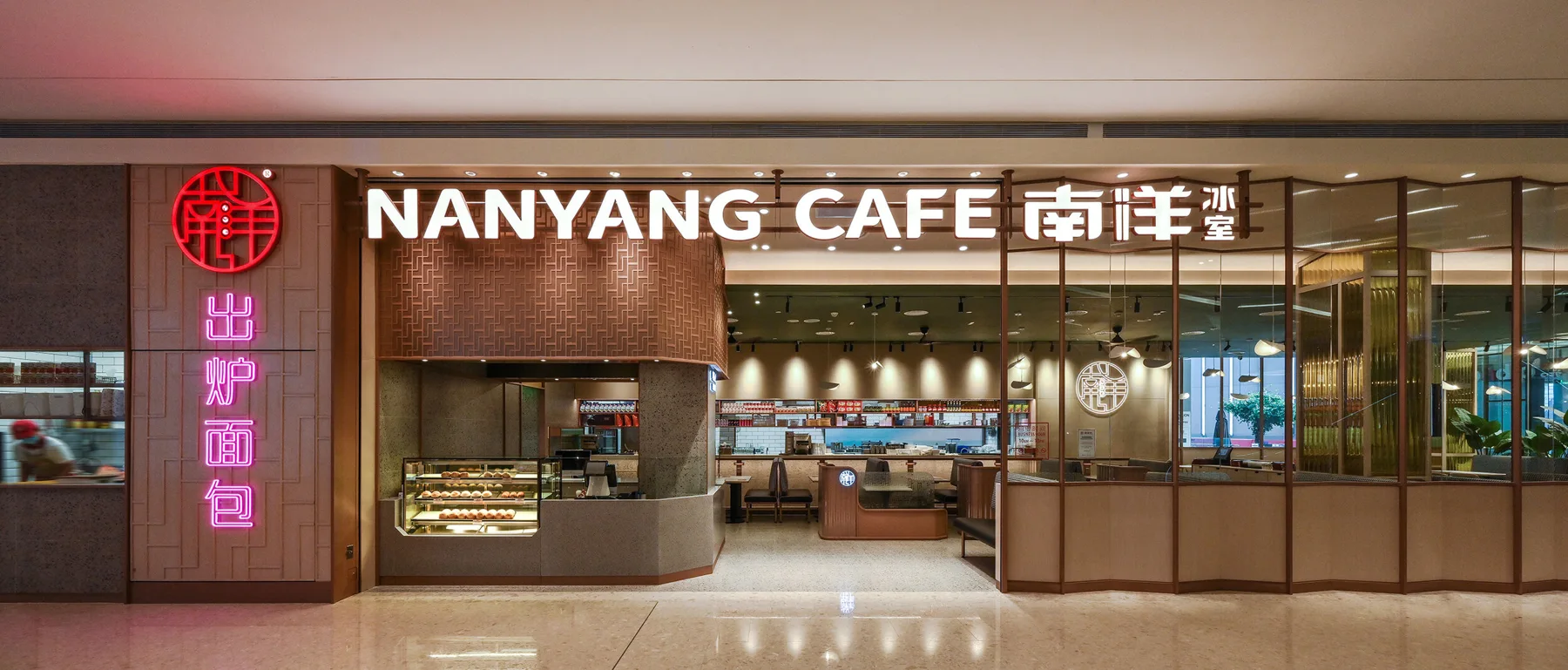
Interpret familiar elements without copying a traditional interior
The concept, “Simplicity with the Taste of Asia”, draws on architectural fragments from Malaysia, Hong Kong, Southern China and Thailand. Sliding doors, ribbed glass, grille patterns and collapsible shop gates are reinterpreted through a restrained palette of concrete, wood, steel, glass and terrazzo. The references shape a contemporary café rather than a literal reconstruction.
Plan around the shell and the mall
The site presented existing structural columns, an elongated double frontage, shopping-mall requirements and mechanical-service limitations. These conditions informed circulation and seating. The long frontage also created an opportunity for visual openness towards the mall. Edition 2 records these constraints without supplying a measured seating-performance assessment.
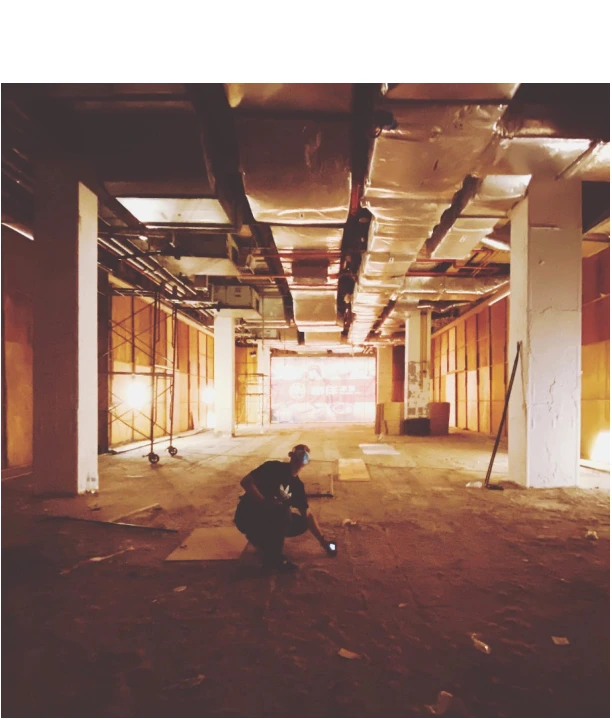
The unfinished site before the café interior was installed. Edition 2, PDF page 14.
Test the artwork across a folded surface
A watercolour by a local Malaysian artist was translated onto a zig-zag timber feature wall using UV printing. Before production, a paper mockup tested how the image would read across the folded planes and from different viewing angles. The study connects graphic composition with the geometry of the joinery, allowing the mural to remain coherent as visitors move.
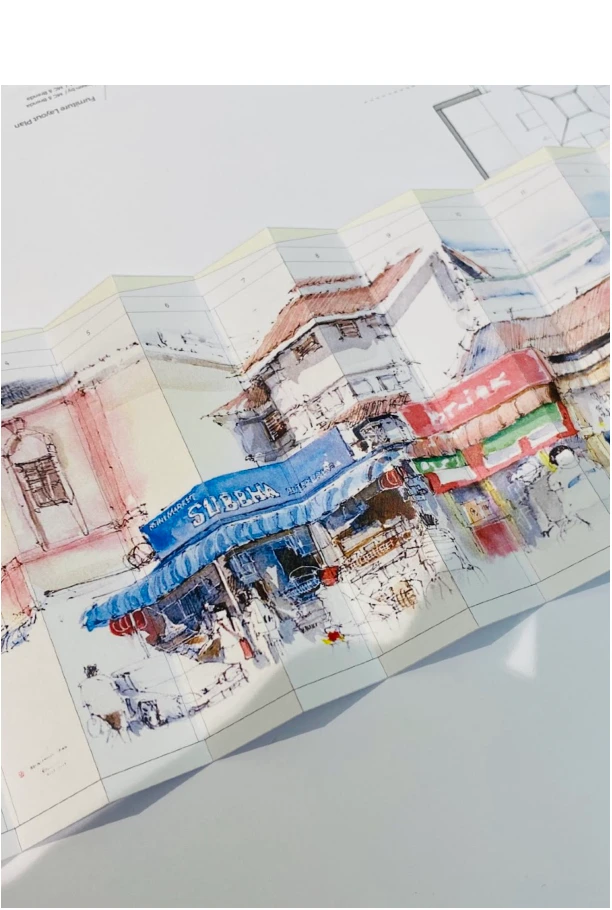
The folded mural mockup used to study the artwork across the zig-zag feature surface. Edition 2, PDF page 14.
Retain the pattern while changing the material
The initial houndstooth fabric did not meet the durability needs of a busy dining environment. The design retained its graphic identity by reproducing the pattern with UV printing on PVC upholstery. This is a specific example of separating visual intention from material selection: the pattern remained, while the substrate was reconsidered for use and maintenance.
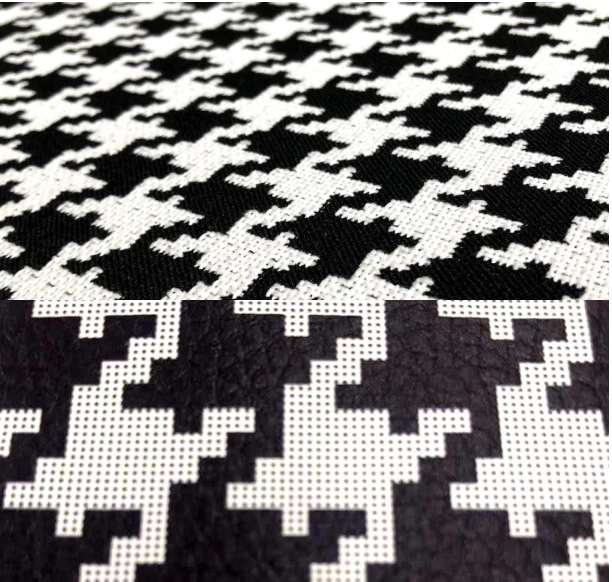
Houndstooth material studies accompanying the profile’s account of the move from fabric to UV-printed PVC upholstery. Edition 2, PDF page 14.
Coordinate the detail with delivery conditions
Construction took place during the pandemic. Material sourcing, labour availability and site-hygiene requirements added coordination challenges. The case study shows why material trials and physical mockups matter alongside concept imagery: they allow an idea to be tested against fabrication, operations and the conditions of delivery.
Adapted from DMZ Portfolio Edition 2, PDF pages 13–14. Drawings, studies and photographs are reproduced from the original case study.