Begin with the story, then organise the space
At the Terengganu State Museum, PETRONAS Energy Gallery was conceived as a guided journey through energy, local heritage and future transformation. Edition 2 describes a sequence of immersive environments rather than a collection of unrelated exhibits. The plan gives visitors a way to follow the subject while allowing individual displays to offer different levels of engagement.
Translate past, present and future into a route
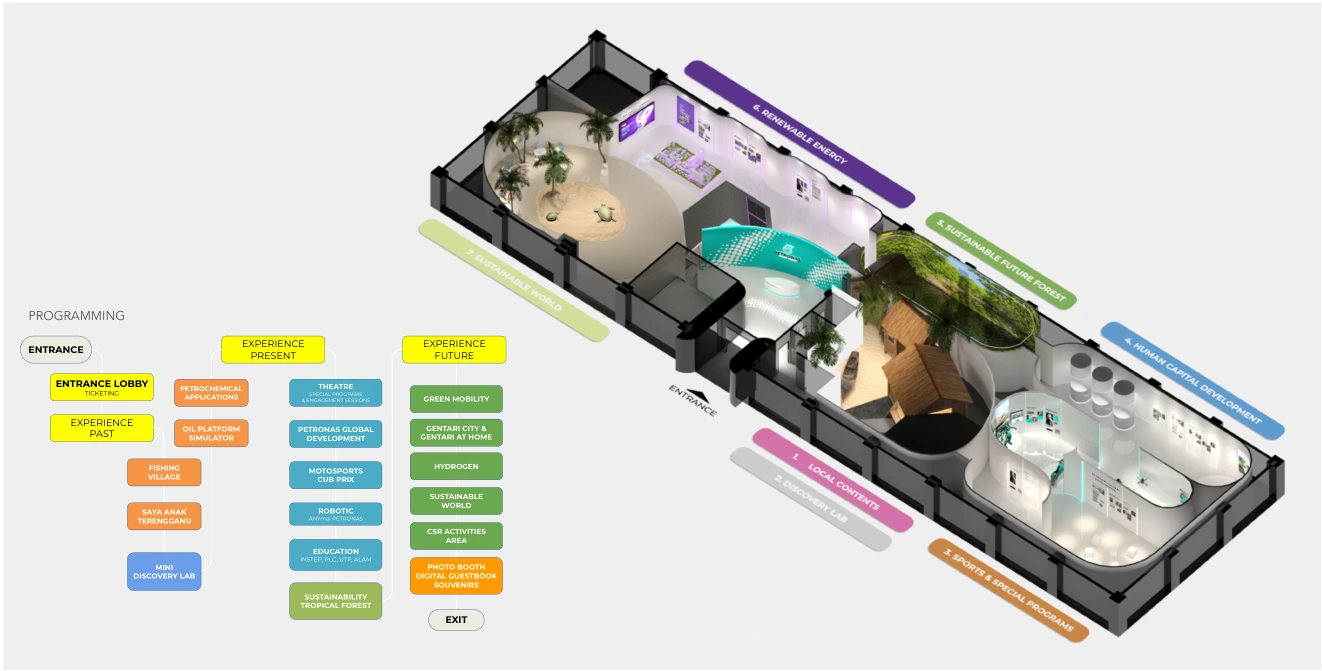
The programming diagram connects the entrance lobby and ticketing with experiences of the past, present and future, followed by the exit. It also identifies the theatre and spaces for special programmes and engagement. This is an early design tool: the sequence establishes the relationship between content, visitor movement and the rooms required to support it.
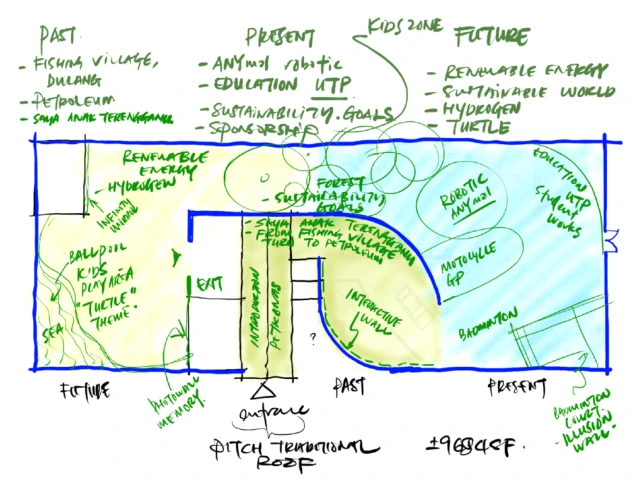
Hand-drawn zoning study connecting the past, present and future narratives. Edition 2, PDF page 10. This is a concept study, not a construction drawing.
Develop the transition between exhibits
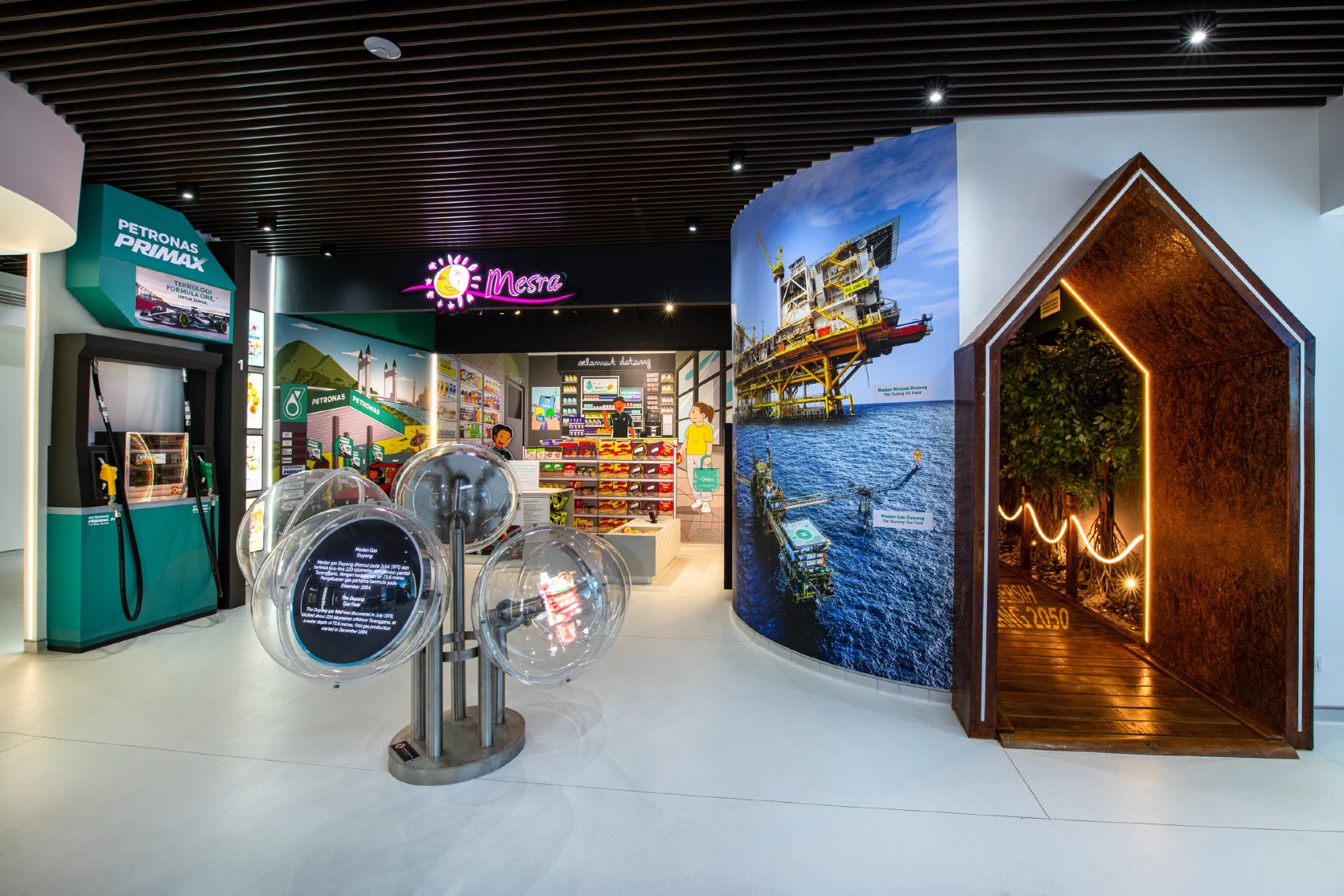
Hand sketches explore how the exhibits are experienced in section and perspective. The drawings study relationships between display elements, framing, media and the visitor. In the completed gallery, lighting, sound and projected imagery contribute to the change in atmosphere between experiences. The mangrove tunnel is one example of a transition becoming part of the story.
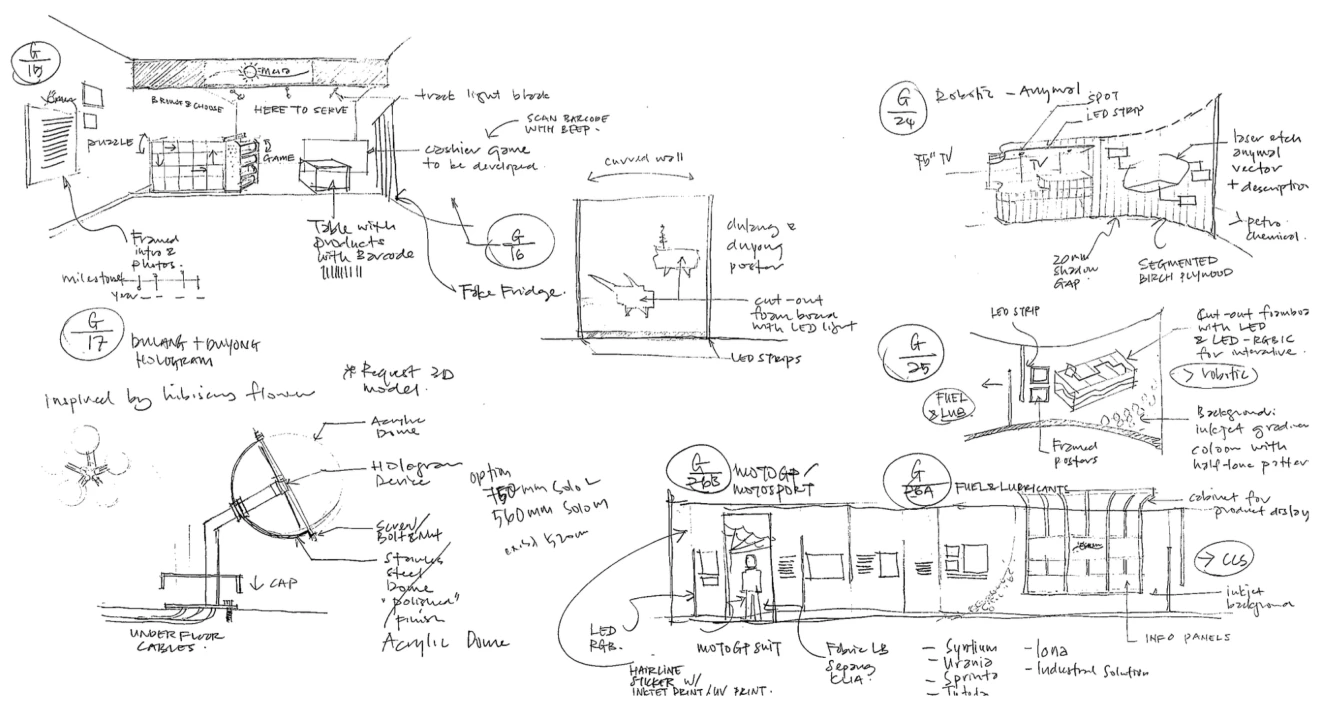
Original exhibit sketches showing spatial relationships, display concepts and media integration. Edition 2, PDF page 11.
Make complex subjects approachable
The case study describes a holographic sphere presentation of offshore platforms and an exhibit centred on motorsport engineering. These are different ways of introducing technical subject matter: one uses dynamic media to explain infrastructure, while the other gives visitors a recognisable physical focus. Their placement belongs to the wider visitor journey.
Connect the narrative to material choices
The construction strategy also carries the message. Existing guide rails were repurposed as display bases and rubber floor tiles were cleaned for reuse in the oil-platform zone. The project connects its sustainability narrative to specific retained components, with the material applications explored further in our responsible-design insight.
Adapted from DMZ Portfolio Edition 2, PDF pages 10–12. Drawings, studies and photographs are reproduced from the original case study.